Table of Contents
Nursing Home Companion Services in London, Ontario
In long-term care homes, companionship plays a vital role in reducing isolation and boosting well-being. Nursing Home Companion Services offer non-medical support like emotional chats, social activities, and light daily help for residents. Here in London, Ontario, families trust nursing home companion London Ontario options to enhance quality of life.
Our personal support workers (PSWs) provide companion care by joining residents for outings, facilitating family visits, and sparking meaningful conversations, and encouraging ongoing social connections, purposeful activities, and consistent daily meaningful engagement. According to Government of Ontario guidelines on long-term care home living, PSWs deliver essential daily support, while companions complement this as designated caregivers. These services align with provincial frameworks, bridging nursing home care and home/community options for seamless support.
Benefits include less loneliness, better mood, and active engagement, as official provincial guidelines highlight social activities' importance. We at Safe Haven Home Care Services deliver thoughtful, personalized PSW companion support tailored to each resident's needs.
Ready to bring comfort and companionship? Contact us at Safe Haven Home Care Services in London, Ontario, for reliable nursing home companionship that feels like family.
Understanding Nursing Home Companion Services
Beyond basic medical care, nursing home companion care adds vital personal touches that enhance daily life for residents. At Safehaven Home Care Services in London, Ontario, our Nursing Home Companion Services focus on companionship and gentle support, helping seniors feel connected and valued in long-term care homes. These services align with Government of Ontario guidelines for resident support, emphasizing social interaction and basic assistance to promote dignity and comfort.
Roles and Responsibilities of Companions
Companions in nursing homes play a key role in fostering social connections and providing light assistance, as outlined in provincial long-term care standards. Their daily tasks keep residents engaged and independent.
- Facilitating social conversations with residents about hobbies or family.
- Assisting with short walks around the facility for safe mobility.
- Tidying personal spaces without deep cleaning to maintain comfort.
- Reading aloud from books or newspapers for entertainment.
- Monitoring for signs of distress during interactions.
For instance, companions help someone like Mrs. Smith feel less isolated by chatting about her family photos, sparking smiles and stories. This resident-centered approach builds trust and routine. Overall, these efforts reduce loneliness and boost emotional well-being, per Government of Ontario guidelines on daily living activities.
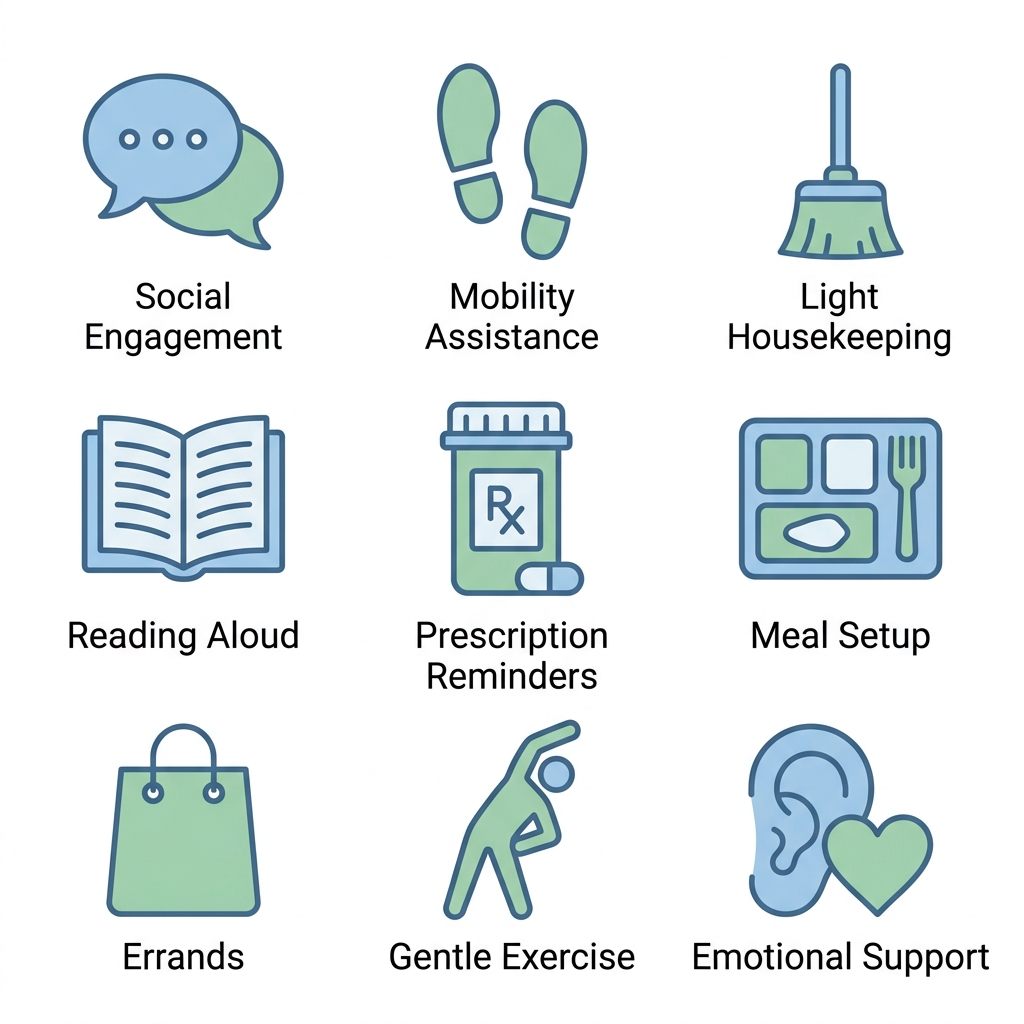
Icon grid of key nursing home companion and PSW roles
These visual representations highlight how our companions integrate seamlessly into nursing home routines, supporting the full spectrum of non-clinical needs.
Personal Support Workers in Nursing Homes
While companions focus on engagement, personal support workers (PSWs) in nursing homes handle practical supports, forming the largest staff group according to the Government of Ontario's long-term care staffing study. PSWs deliver essential daily aid with compassion.
- Setting up meal trays with preferred foods for enjoyable dining.
- Reminding residents to take medications at scheduled times.
- Accompanying residents on errands like picking up prescriptions.
- Helping with simple grooming like brushing hair.
- Documenting daily activities in resident logs.
A PSW might assist John recovering from a fall by organizing his tray and noting his progress, easing family worries. Official data shows PSWs provide about 2.3 hours of direct care per resident daily, ensuring consistency. This reliable help maintains health routines and independence effectively.
Companion Care for Wellness and Engagement
Companion care in nursing homes extends to wellness by promoting activities that uplift spirits and bodies. We prioritize emotional and physical engagement tailored to each resident.
- Organizing group games such as bingo or trivia for fun.
- Leading seated stretching exercises for mobility-limited residents.
- Providing one-on-one listening sessions for emotional venting.
- Encouraging participation in facility events like communal dining.
- Tracking mood improvements over time.
These interactions, aligned with Ontario's care expectations, help residents like Mary join outings, fostering joy and purpose. Government guidelines stress such recreation staff roles for quality of life. Ultimately, companion care strengthens community ties and holistic wellness.
These services often complement home care options, explored next.
Benefits of Nursing Home Companion Care for Seniors
At Safehaven Home Care Services, we believe nursing home companion services bring profound joy and comfort to seniors in long-term care. These thoughtful programs reduce loneliness, boost health, and support families. In this section, we explore emotional and social advantages, health improvements, and memory care benefits that enhance daily life.
Emotional and Social Advantages
Companion care in nursing homes fosters deep connections that combat isolation for seniors. Our companion caregivers spend quality one-on-one time, sharing stories and laughter that brighten days.
Key benefits include:
- Reduced isolation: Regular chats and activities like puzzles create bonds, easing the solitude many feel in facilities.
- Improved mood: Personalized hobbies or reminiscing sessions lift spirits, bringing smiles and vitality.
- Family relief: We give dedicated time so loved ones can rest, knowing their senior is engaged and happy.
Imagine a senior eagerly awaiting their companion for a game of cards; these moments build emotional security. Beyond these emotional gains, companion care also boosts physical health and wellness.
Health and Wellness Improvements
Nursing home companion care programs promote active lifestyles tailored to each senior's abilities. Our team encourages gentle movement and routines that preserve independence and dignity.
Highlights feature:
- Mobility support: Assisted walks around grounds or wheelchair pushes keep seniors moving safely.
- Exercise encouragement: Light stretching or group sessions build strength and balance.
- Daily routine enhancements: A personal support worker joins for meals and hygiene reminders, fostering self-reliance.
Picture a resident enjoying a sunny stroll with their companion, feeling stronger and more confident. These physical boosts naturally extend to cognitive support, especially for memory challenges.
Support for Memory Care and Dementia
Companion care shines in memory units, offering engaging activities that stimulate minds and hearts. As a real-world example, the Alzheimer Society of Prince Edward Island's Volunteer Companion Program pairs trained volunteers for one-on-one visits, reducing isolation through conversations and activities that improve mood and cognitive health.
Vital advantages are:
- Tailored engagement: Memory games, music therapy, or sensory play spark joy for Alzheimer's patients.
- Cognitive stimulation: Storytelling and familiar routines help slow decline, promoting mental sharpness.
- Emotional security: Personal companions provide consistency, easing anxiety and fostering calm.
One senior might delight in singing old favorites, reliving happy memories. These benefits make nursing home companion care a worthwhile investment for lasting well-being. Families notice improved engagement, reduced caregiver stress, and better overall quality of life when companions provide consistent, respectful, and person-centered attention that honors each senior's preferences and preserves their dignity and family peace.
How Nursing Home Companion Services Work
Beyond selection, understanding how Nursing Home Companion Services work ensures smooth integration for residents and families in Ontario. We at Safehaven Home Care Services match caregivers thoughtfully to needs, structure daily visits with Real-Time Updates Through Our Family Portal, and offer flexible funding paths. This approach delivers Care That's Truly Personal.
Matching Caregivers to Needs
We begin by rigorously screening our caregivers to ensure reliability and compassion. Caregivers undergo criminal record checks, reference verification, and skills assessments tailored to nursing home settings. These steps, aligned with provincial standards, confirm they can provide safe, empathetic support.
Next, we customize care plan customization based on each resident's mobility, cognitive status, and social preferences. For instance, a resident needing gentle conversation gets a caregiver skilled in memory engagement, while one preferring walks pairs with an active companion. As personal support workers or companions, they adapt to individual rhythms.
Scheduling flexibility supports one-time visits, recurring shifts, or on-call availability, fitting busy nursing home routines in Ontario. This personalized matching builds trust and comfort from day one. These operations pave the way for meaningful daily interactions.
Daily Operations and Family Updates
Daily companion care visits typically last 2-4 hours, focusing on engaging activities like games, light walks, or shared stories to boost mood and social connection. Unlike hospital companion care, nursing home visits emphasize routine comfort and wellness in a familiar environment.
We coordinate closely with nursing home staff for seamless integration, including medication reminders and activity participation. Families stay connected through our secure online portal, offering live updates, photo sharing, and progress logs. This Real-Time Updates Through Our Family Portal provides peace of mind, letting you see the comfort, companionship, and gentle support in action.
Visit structures follow the resident's care plan, with caregivers logging details for continuity. According to Home Care Ontario, such professional coordination enhances service delivery. These reliable operations lead naturally to positive outcomes for everyone involved.
Costs and Funding in Ontario
Costs for nursing home companion programs in Ontario generally range from $30-50 per hour, depending on visit length, frequency, and location like London or St. Thomas. We provide transparent pricing without hidden fees, ensuring families budget confidently for Thoughtful Support That Feels Like Family.
Funding options include referrals through Ontario Health atHome, which assesses needs and develops personalized plans per Government of Ontario guidelines. Private pay suits those seeking immediate or customized services, while other supports like veteran affairs benefits may apply based on eligibility.
- Contact Ontario Health atHome for assessments and care coordination.
- Explore private arrangements for flexibility.
- Appeal decisions via established provincial channels if needed.
These accessible pathways make quality care attainable. Let's make your home a Safehaven by understanding costs upfront, setting the stage for lasting benefits in resident well-being.
Best Practices for Hiring Nursing Home Companions
Hiring the right companions for your loved one in an Ontario nursing home brings peace of mind and enhances their daily life. At Safehaven Home Care Services in London, Ontario, we specialize in Nursing Home Companion Services that prioritize comfort, companionship, and gentle support. Start by evaluating providers to ensure thoughtful support that feels like family.
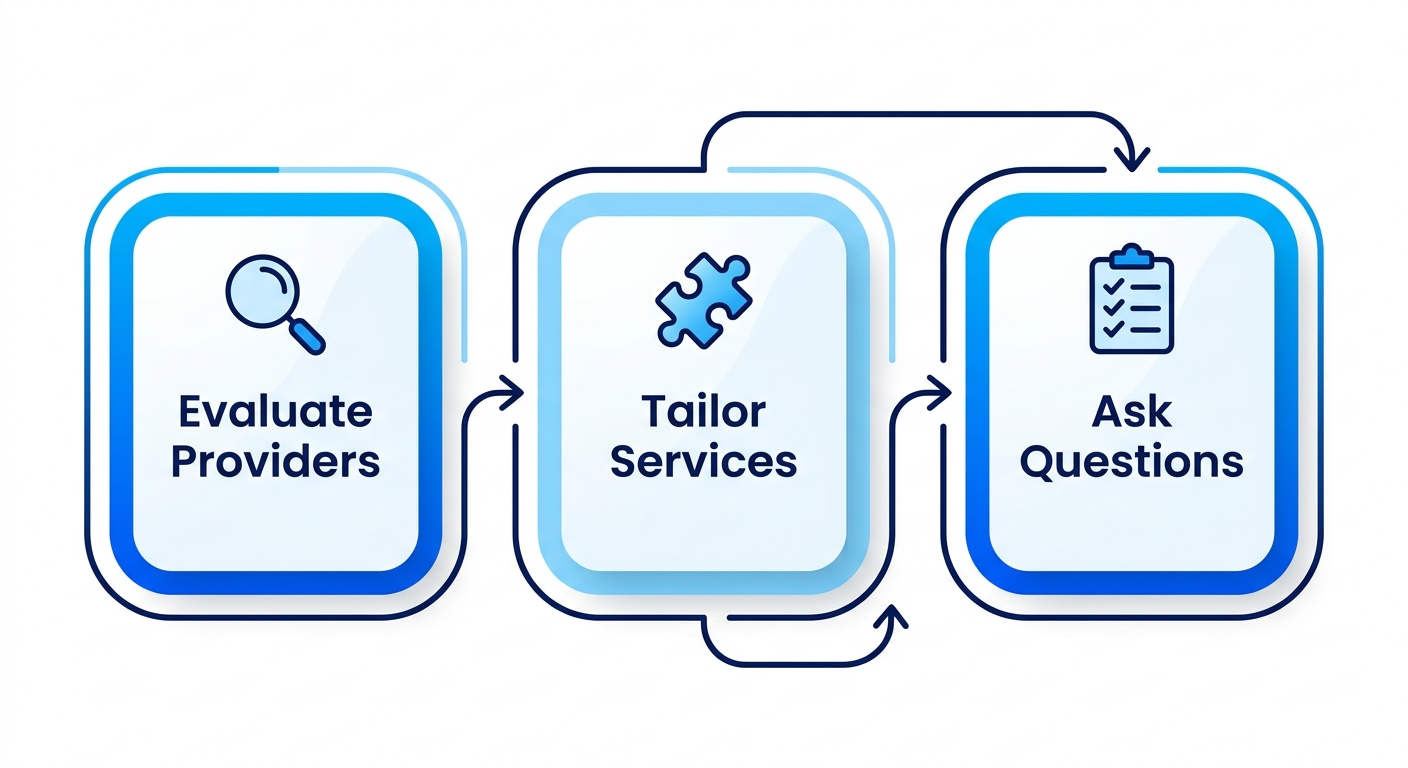
Three-step process for effectively hiring nursing home companions
This simple roadmap guides families through the hiring journey, helping you match caregivers to specific needs while focusing on quality and fit.
Evaluating Providers and Screening
Peace of mind starts with thorough checks on caregiver qualifications and agency reliability. In Ontario nursing homes, verifying credentials like personal support worker (PSW) certifications is essential, as PSWs make up 58% of long-term care staff according to the Government of Ontario's authoritative long-term care staffing study.
Screening Checklist:
- Contact at least three references to gauge reliability and compassion.
- Check agency background via Ontario's public registries for compliance.
- Assess local service availability, including hospital companion services that extend to nursing home settings for seamless support.
- Confirm training in emergency response and infection control.
We recommend prioritizing agencies with low turnover rates, as about 25% of experienced PSWs leave annually per the same government study. This step ensures safe, suitable matches.
Tailoring Services to Resident Needs
Every resident deserves care that's truly personal, matched to their unique care plan. Begin with cognitive assessments to decide between personal support workers for daily living help, companions for socialization, or memory care aides for specialized engagement.
Matching Guide:
- Use PSW services for mobility, meal setup, and prescription reminders.
- Opt for companion care to combat loneliness through outings and conversation.
- Select memory care for dementia-friendly activities, as resident needs grow more complex.
Home Care Ontario's guide to provider evaluation stresses aligning services with individual plans in Ontario nursing homes. At Safehaven, our family-centered approach tailors Nursing Home Companion Services to preserve dignity and independence.
Questions to Ask and Next Steps
Armed with the right questions, families can confidently select companion caregivers. We understand the emotional weight of this decision--here's how to proceed.
Key Inquiries:
- What is your staff-to-client ratio?
- Are caregivers certified as personal support workers?
- How do you screen for companion care qualifications?
- What training covers memory care needs?
- Do you offer flexible scheduling for nursing home visits?
- What's your policy on real-time updates via a family portal?
- How do you handle emergencies in Ontario nursing homes?
- Can we review sample care plans?
- What is the process for caregiver matching?
- Do you provide overnight or respite companion care?
Request a 1-2 week trial visit to observe fit, then review contracts for emergency protocols. Once hired, consider ongoing monitoring to maintain quality care. Let's make their home a Safehaven.
Next Steps for Nursing Home Companion Support in London
Once you've identified the need for Nursing Home Companion Services in London, Ontario, we're here to guide you through practical steps. These actions empower families to integrate companion support seamlessly into long-term care homes, offering comfort, companionship, and gentle support.
Follow these key steps today:
- Contact your local Alzheimer Society chapter. Specialized program guidelines from a dementia support association detail the Volunteer Companion Program, ideal for individuals with dementia in long-term care. Inquire about eligibility, volunteer matching, and requesting a trained companion for weekly one-on-one visits, even if new volunteer intake is paused.
- Review Government of Ontario guidelines on long-term care. Authoritative provincial guidelines for LTC residents highlight notifying your care coordinator in writing about companion needs, understanding resident rights, and visitor policies to facilitate caregiver access.
- Inquire about personal support worker availability. Discuss PSW companion roles with the home's director of nursing to explore daily support options.
- Explore companion care options. Confirm how private companions can join your loved one's personalized care plan.
For professional nursing home companion services in London that feel like family, contact safehaven home care services. Let's make their home a Safehaven--reach out today for personalized care.